3D Hair Modeling In 2025: Techniques And Technologies For Realistic And Efficient Results
3D Hair Modeling in 2025: Techniques and Technologies for Realistic and Efficient Results
Related Articles: 3D Hair Modeling in 2025: Techniques and Technologies for Realistic and Efficient Results
Introduction
In this auspicious occasion, we are delighted to delve into the intriguing topic related to 3D Hair Modeling in 2025: Techniques and Technologies for Realistic and Efficient Results. Let’s weave interesting information and offer fresh perspectives to the readers.
Table of Content
3D Hair Modeling in 2025: Techniques and Technologies for Realistic and Efficient Results
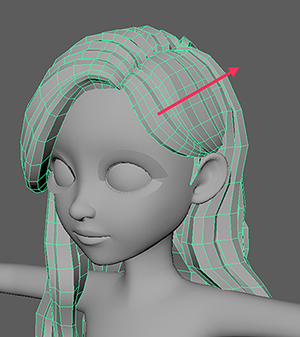
The quest for realistic hair in 3D modeling has been a long and challenging one. While significant strides have been made, achieving truly believable, dynamic hair remains a computationally expensive and technically demanding process. However, 2025 promises a landscape significantly altered by advancements in both hardware and software. This article explores the techniques and technologies shaping the future of 3D hair modeling, offering a comprehensive guide for artists aiming to create stunning, lifelike results efficiently.
I. The Evolution of Hair Modeling:
Before delving into the future, it’s crucial to understand the past. Early methods relied on simple polygons, resulting in stiff, unnatural-looking hair. Later, techniques like hair strands modeled as curves or NURBS offered more flexibility, but still lacked the volume and complexity of real hair. The introduction of particle systems provided a breakthrough, allowing for more realistic simulations of hair movement and behavior. However, these systems were computationally intensive, limiting their use in real-time applications.
The rise of procedural generation marked another significant leap. Algorithms could create vast quantities of hair strands with varying lengths, thicknesses, and curvatures, dramatically increasing realism and efficiency. However, controlling the intricate details and achieving consistent quality across different styles remained a challenge.
II. Key Technologies Shaping 2025’s Hair Modeling Landscape:
Several key technological advancements are converging to revolutionize 3D hair modeling in 2025:
-
Advanced GPU Acceleration: The continued exponential growth in GPU processing power is paramount. More powerful GPUs enable real-time simulations of complex hair physics, including interactions with wind, gravity, and other objects. This opens the door to interactive hair styling tools and more efficient rendering pipelines.
-
Machine Learning (ML) and Artificial Intelligence (AI): ML and AI are transforming various aspects of hair modeling. AI-powered tools can automatically generate realistic hair meshes from simple inputs like images or sketches. They can also learn from vast datasets of real hair to create highly accurate and diverse hair styles. This automation reduces the manual workload significantly, allowing artists to focus on creative aspects rather than tedious technical tasks. Expect AI to excel in tasks like:
- Hair generation: Creating realistic hair geometry from reference images or even text descriptions.
- Hair styling: Automatically styling hair based on predefined parameters or user input.
- Hair simulation: Simulating realistic hair physics with significantly reduced computational cost.
- Hair grooming: Automatically cleaning up and optimizing hair geometry for rendering.
-
Improved Simulation Algorithms: Researchers are constantly developing more efficient and accurate hair simulation algorithms. Techniques like strand-based simulations, which focus on the individual behavior of each hair strand, are becoming more prevalent. These algorithms are designed to handle complex interactions between strands and environmental factors, resulting in more realistic and dynamic hair. Expect improvements in:
- Collision detection: More accurate and efficient collision detection between hair strands and other objects.
- Self-collision: Handling the complex interactions between individual hair strands to prevent unnatural clumping.
- Fluid dynamics: Simulating the interaction of hair with air and other fluids more realistically.
-
Enhanced Rendering Techniques: Rendering realistic hair remains a significant challenge. However, advances in rendering techniques, such as path tracing and ray tracing, are producing more photorealistic results. These techniques accurately simulate the scattering and reflection of light on individual hair strands, resulting in more believable highlights, shadows, and overall appearance. Furthermore, techniques like micro-surface scattering are becoming more accessible, allowing for the simulation of the intricate surface details of hair.
-
Cloud Computing and Collaboration: Cloud computing platforms offer access to immense computational resources, making complex hair simulations feasible for a wider range of users. Cloud-based tools also facilitate collaboration, allowing multiple artists to work on the same hair model simultaneously.
III. Practical Techniques for 2025 Hair Modeling:
Combining these technological advancements, here are some practical techniques expected to dominate 2025 hair modeling:
-
Hybrid Approaches: Combining procedural generation with manual sculpting will likely become the standard. Procedural generation creates the base hair geometry, while manual sculpting allows artists to refine details, add individual strands, and achieve precise control over specific areas.
-
Reference-Based Modeling: Utilizing high-quality photographs and videos as references will be crucial. AI tools can analyze these references to automatically generate realistic hair geometry, significantly reducing the time and effort required.
-
Data-Driven Hair Styling: Artists will leverage large datasets of hair styles to create new and unique looks. AI algorithms can analyze these datasets to identify trends, predict styles, and even generate novel styles based on user preferences.
-
Interactive Grooming Tools: Real-time feedback and manipulation of hair will be essential. Interactive grooming tools, powered by advanced GPU acceleration and AI, will allow artists to style and groom hair in real-time, significantly improving workflow efficiency.
-
Physically-Based Rendering (PBR): PBR techniques will become increasingly important for achieving photorealistic results. Accurate simulation of light interactions with hair will be crucial for creating believable highlights, shadows, and overall appearance.
IV. Software and Hardware Considerations:
The software landscape will continue to evolve, with leading 3D modeling packages incorporating advanced hair modeling tools and AI-powered features. Expect tighter integration between modeling, simulation, and rendering software.
Hardware requirements will also increase, with high-end GPUs and substantial RAM becoming essential for handling complex hair simulations and rendering. Cloud-based rendering solutions will provide access to powerful hardware for users with limited local resources.
V. Challenges and Future Directions:
Despite significant advancements, challenges remain:
-
Computational Cost: Simulating highly detailed hair with complex physics remains computationally expensive, even with advanced hardware. Research into more efficient algorithms and hardware acceleration is crucial.
-
Data Acquisition: Creating large, high-quality datasets of hair for training AI models is a significant undertaking. Developing efficient and accurate methods for data acquisition is vital.
-
Artistic Control: Balancing the power of AI with artistic control remains a challenge. Tools must provide artists with sufficient control over the generated hair while leveraging the efficiency of AI.
The future of 3D hair modeling is bright. The convergence of advanced GPU acceleration, AI, improved simulation algorithms, and enhanced rendering techniques promises a new era of realistic and efficient hair creation. By embracing these technologies and mastering the techniques discussed here, artists can create stunningly realistic hair that elevates their 3D work to new heights in 2025 and beyond. The focus will shift from painstaking manual creation to a collaborative process where AI assists artists in achieving their creative vision with unprecedented speed and realism.




Closure
Thus, we hope this article has provided valuable insights into 3D Hair Modeling in 2025: Techniques and Technologies for Realistic and Efficient Results. We appreciate your attention to our article. See you in our next article!